Your first court date in NSW will take up most of a morning, and almost all of that is waiting. You will be on your feet in front of the magistrate for a minute or two, and in that time you will say perhaps fifteen words.
Knowing those two numbers in advance takes a surprising amount of the fear out of the day. Our experience with clients tells us that people need answers to different questions. Things like “Where to go when you walk into the Local Court?” “What to wear?” “ What to call the person on the bench?”, and whether you have to speak at all.
What happens at your first court date?
Your first date is almost certainly a mention, not a hearing.
A mention is a short administrative appearance. Nobody gives evidence. No witnesses are called. Nothing is decided about whether you are guilty. The court is working out one thing: where this matter goes next.
That usually means the magistrate asks whether you have a lawyer, whether you have been given the police facts and your criminal record, and whether you intend to plead guilty or not guilty. If you are not ready to answer, you can ask for time. If you plead guilty on the day and the matter is straightforward, you may be sentenced then and there. If you plead not guilty, the matter is adjourned and a hearing date is set for later.
Most mentions take between two and five minutes. The waiting is the long part, not the appearance.
What should I wear to court?
There is no dress code, and you will not be turned away for wearing your work clothes. Plenty of people come straight off a shift. If that is you, do not lose sleep over it.
What you are aiming for is simple: look like you have taken the day seriously. A magistrate forms an impression in the few seconds it takes you to walk to the bar table, and on a guilty plea that impression is part of what they are assessing.
Practically, that means covered shoulders and knees, closed shoes, and clothes without holes, stains or slogans. A collared shirt if you own one. Neat trousers, a skirt or a dress at knee length or longer. If all you have is clean jeans and a plain jumper, wear clean jeans and a plain jumper. Tidy beats expensive every time.
For women, the same principle applies and it is worth being specific because the question comes up constantly: a blouse or a plain top with a cardigan or blazer, trousers or a knee-length skirt, and flat or low shoes. Nothing sheer, nothing strapless, nothing you would wear out on a Saturday night. Keep jewellery and makeup understated.
What to leave off: hats, caps, sunglasses, singlets, thongs, activewear, and anything with writing on it. Take your hat and sunglasses off before you walk through the courtroom door, not after someone tells you.
If you are attending to support someone rather than as a defendant, dress the same way. The public gallery is still the courtroom.
Where do I go when I get there?
Arrive early. Not on time, early. Give yourself at least thirty minutes before your listed time.
You will go through a security screening on the way in, the same as an airport. Empty your pockets, and leave anything sharp at home or in the car.
Once you are inside, find the daily court list. It is displayed on screens or printed sheets near the entrance. It shows every matter being heard that day, the courtroom each one is in, and the order they are listed. Find your name, note the courtroom number, and go and sit in that courtroom. If you cannot find your name, ask at the registry counter rather than guessing.
You will see abbreviations on the list. Your matter will usually be listed as “R v” followed by your surname. The R stands for Rex, meaning the Crown, because in a criminal matter the state brings the case rather than a person.
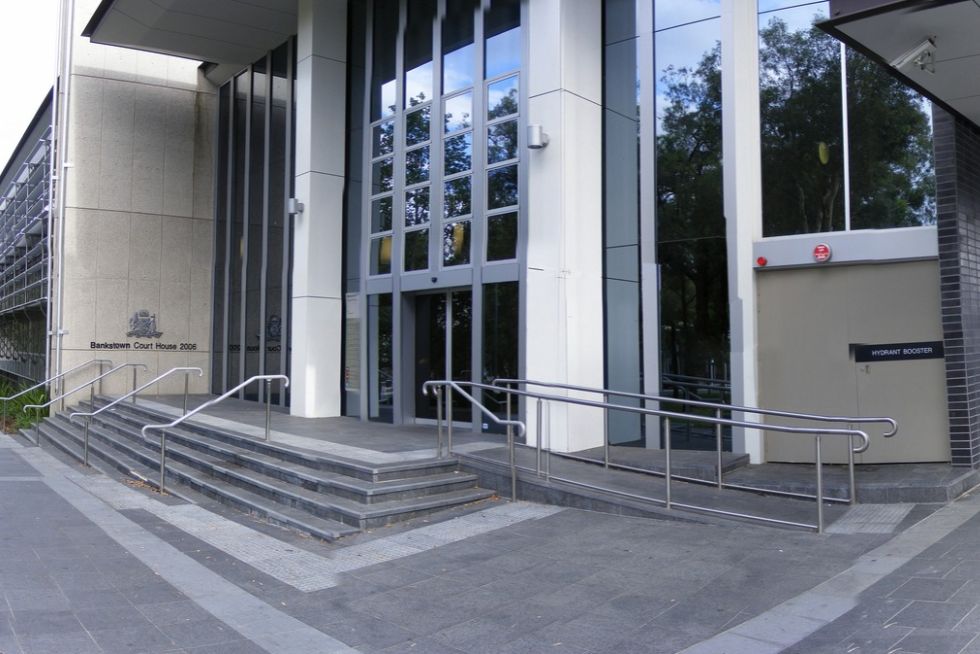
For instance, Bankstown Local Court is a busy court. When you enter the courthouse, you will be required to put your belongings in a tray and both you and the tray holding your belongings will proceed through a scanner. The scanner will detect impermissible items such as a knife. After collecting your belongings, head down and to your right; you will see a pinboard with the lists for each court. Look for your name to confirm which court you must go to. It is usually in alphabetical order. If you are having trouble, approach the duty solicitor who is usually standing or sitting at a round table on ground level, outside of Court 1.
The list starts at 9:30 am. This does not mean you will be heard at that time. A first mention list usually takes almost all day. Some judges like to hear self-represented individuals first, to clear the courtroom. Other judges hear legal practitioners first.
What do I call the magistrate?
“Your Honour”, both when you are speaking to them and when you are speaking about them.
This is worth a note, because the terminology changed recently and a lot of what you will read online is now out of date. Since 28 March 2026, NSW magistrates have officially been titled Judges of the Local Court, under changes to the Local Court Act 2007. Most people, including plenty of lawyers, still say magistrate in everyday conversation. The form of address has not changed either way: it was “Your Honour” before, and it is “Your Honour” now.
The rest of the etiquette is short and easy to remember. Stand when the magistrate enters and when they leave. Bow your head slightly towards the bench as you enter or leave the courtroom. Stand up when you speak and when your matter is being dealt with. Do not interrupt, and do not talk over anyone.
Turn your phone off completely, not to silent. A vibrating phone on a hard bench is still audible. No food, no drink, no chewing gum, no photos, no recording.
If a registrar is dealing with your matter rather than a magistrate, which happens for straightforward adjournments in some courts, you address them as “Registrar”.
Do I have to say anything?
For most people, at a first mention, the honest answer is a sentence or two at most.
You will be asked to confirm your name. After that, you will either tell the court how you intend to plead, or ask for the matter to be adjourned so you can get advice. That is it. Nobody is going to cross-examine you. Nobody will ask you to explain what happened.
If you have a lawyer, you may not speak at all. Your solicitor announces their appearance, deals with the magistrate, and you sit down.
When you do speak, keep it short and answer only what you were asked. If you do not understand a question, say so. “I’m sorry, Your Honour, I don’t understand” is a perfectly acceptable thing to say in a courtroom and nobody will think less of you for it.
How long will I be there?
Your appearance takes minutes. Set aside the whole morning anyway.
The time on your paperwork is when the list starts, not when your matter is called. Everyone listed that morning gets the same time, and matters are then worked through in an order that depends on who has a lawyer, who is in custody, and how complicated each one is. Matters with legal representation are often called earlier, which is why solicitors can be in and out.
Assume you will be there most of the morning. Do not book anything else for that day, do not park somewhere with a two-hour limit, and bring something to read. Take food if you need to eat at a particular time.
If you are running late, ring or send an e-mail to the court registry before your listed time rather than after it. You can find each court registry’s email address online.
What if I need more time, or I cannot attend?
Asking the court for more time is normal, and it happens all the time. If you have not had a chance to get legal advice, you can ask for the matter to be adjourned at the first mention. Courts routinely grant a first adjournment for that reason. You ask for it in the courtroom, on the day, in one sentence: “Your Honour, I seek an adjournment to obtain legal advice.”
Not turning up at all is a different matter, and it is serious. If you do not appear, the court can deal with your matter in your absence and convict you without hearing anything from you, or issue a warrant for your arrest. Either outcome is far worse than the original matter, and both are avoidable.
If something genuinely prevents you from attending, such as illness or hospitalisation, contact the court registry as early as you can and get documentation. Do not simply not show up.
Should I bring a lawyer?
Some people manage a first mention alone, particularly on a minor matter where they intend to plead guilty and the facts are not in dispute. Most Local Courts also have a duty solicitor, funded by Legal Aid NSW, who can appear for people on a first appearance and assist with guilty pleas, adjournments and bail applications. A means test applies to some of that work. The duty solicitor is free, and if you are unrepresented, you should find one before your matter is called, not after.
Turning up alone can be costly when something else is attached to the charge. If your licence, your job, your visa, a firearms licence, a Working With Children Check or your arrangements with your children could be affected by the outcome, get advice before you enter a plea. A plea is hard to undo, and by the time the consequences become obvious, the moment to act has usually passed.
If you plead guilty to offences you have been charged with and want your matter to be finalised immediately, this can be an issue as you may receive a greater penalty. Preparation is key in ensuring courts do not impose harsh penalties.
Sometimes people are too intimidated to attend court or simply can not be bothered. This is also an issue. If you do not attend court, you can be convicted in your absence. The court will not hear any of your circumstances, and as such, the likelihood of a greater penalty is higher.
Reversing a conviction in your absence is sometimes messy. You must file an annulment application.
To reverse the conviction in your absence, you must file an annulment application. You have 2 years from the date of the order to file an annulment application. It is best to file the annulment application immediately after you are notified that the court made an order in your absence.
What to bring
This list is for anyone appearing without a lawyer.
- Your court paperwork, including the court attendance notice and the police facts sheet
- Photo identification
- Any character references you have obtained
- Any medical reports or other supporting documents
- Something to read, and food if you need it
If we are acting for you, most of it is already in our file. You bring yourself, photo identification and our phone number. We bring the paperwork, tell you where to meet us and what time to be there, and hand the references in ourselves.
Before your court date
Almost nobody walks out of a first appearance saying it was what they expected. It is shorter and far more administrative than the version people build in their heads.
What is worth settling beforehand is how you intend to plead, and what follows from each answer. A plea entered on the morning because it looked like the quickest way out of the room can take two years to work back out of.
Have that conversation while you can still change your mind. Call us on 02 9707 3888 or get in touch. We are in Bankstown, and we are in these courtrooms most weeks of the year.
This article is general information only and is not legal advice. Every matter turns on its own facts.
Frequently Asked Questions
Your first date is usually a mention, which is a short administrative appearance. No evidence is given and nothing is decided about guilt. The court checks whether you have a lawyer and the police documents, and asks how you intend to plead. Most mentions take two to five minutes.
There is no formal dress code, but dress as though the day matters. Covered shoulders and knees, closed shoes, and clean clothes without slogans or holes. A collared shirt if you have one. No hats, sunglasses, singlets, thongs or activewear. You will not be turned away for work clothes.
“Your Honour”. Since 28 March 2026 NSW magistrates have officially been titled Judges of the Local Court, but the form of address is unchanged. Stand when they enter and leave, stand when you speak, and address a registrar as “Registrar”.
Very little. You confirm your name, and then either indicate your plea or ask for an adjournment. Nobody will question you about the alleged offence. If you have a solicitor, they speak for you and you may say nothing at all.
The appearance itself usually takes two to five minutes. The wait is the long part. Your listed time is when the whole list starts, not when your matter is called, so allow most of the morning and do not book anything else that day.
A mention is a brief court appearance where a matter is progressed rather than decided. The court confirms whether you have legal representation and the prosecution documents, takes your plea if you are ready to give one, and sets what happens next.
Yes. If you have not had a chance to get legal advice, you can ask for an adjournment at your first mention and courts commonly grant one. Ask in the courtroom on the day. If illness or another genuine reason prevents you attending, contact the registry beforehand with documentation.
Not always. A duty solicitor funded by Legal Aid NSW attends most Local Courts and can assist with first appearances, guilty pleas and adjournments, subject to a means test for some work. Get your own advice before pleading if your licence, job, visa or children could be affected.